Commemorating the 75th anniversary of the Korean War
More than 40,000 people from 30 nations worldwide died in the Korean War (June 25, 1950 - July 27, 1953). We honor them as we hope for peace.
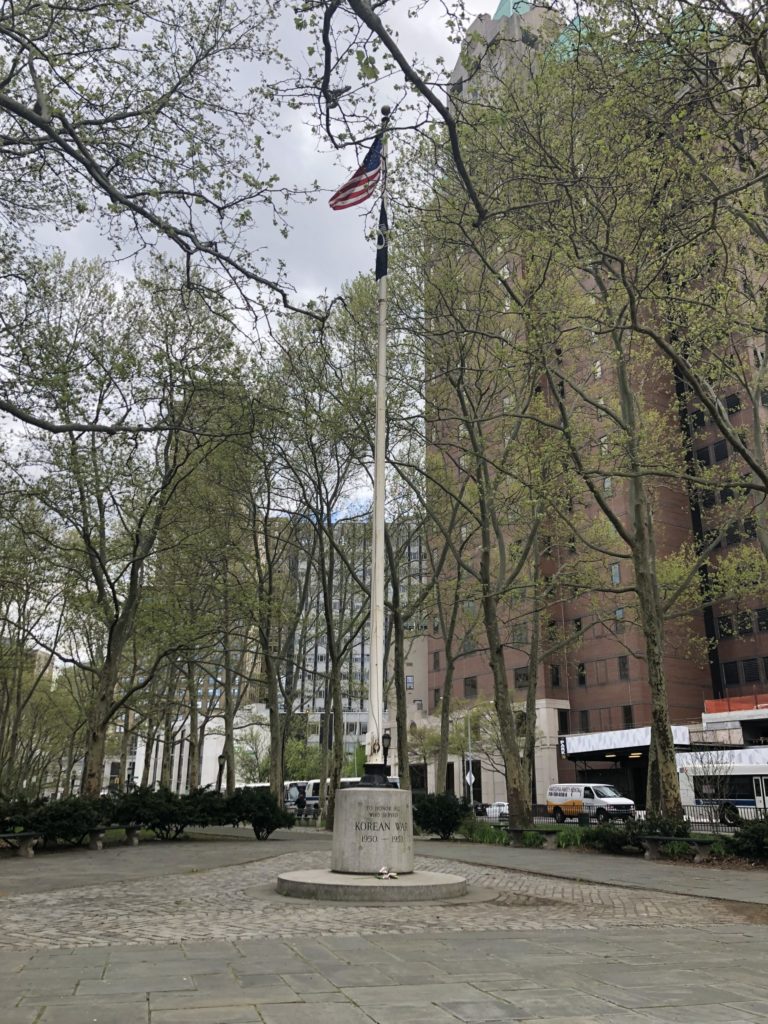
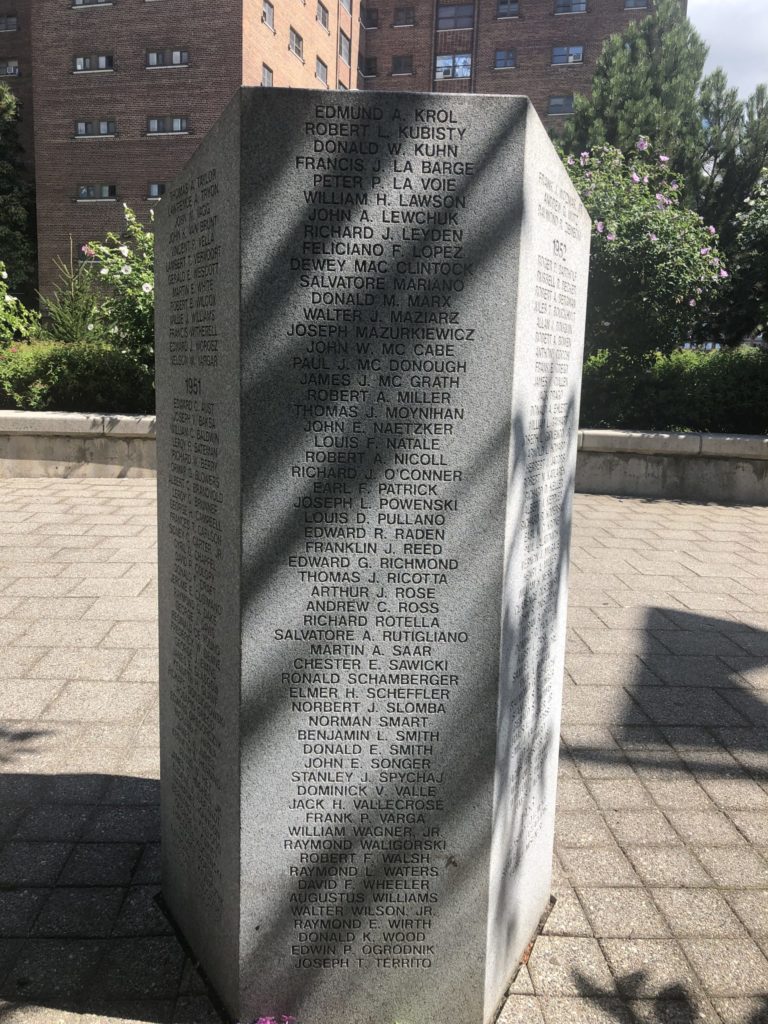
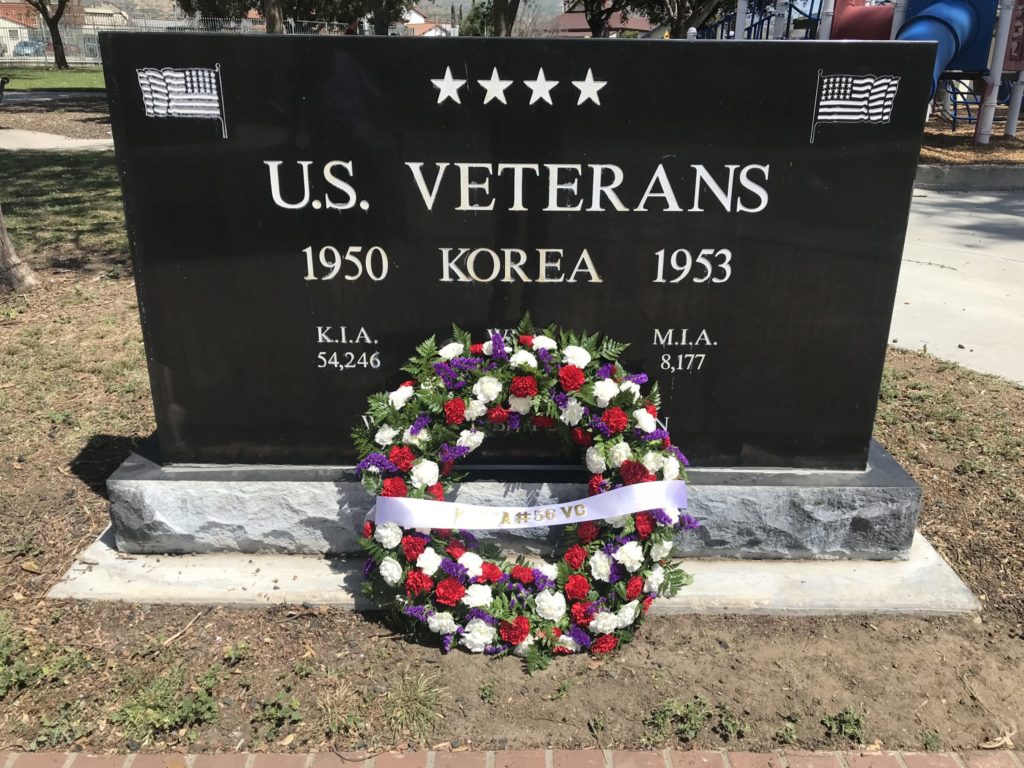
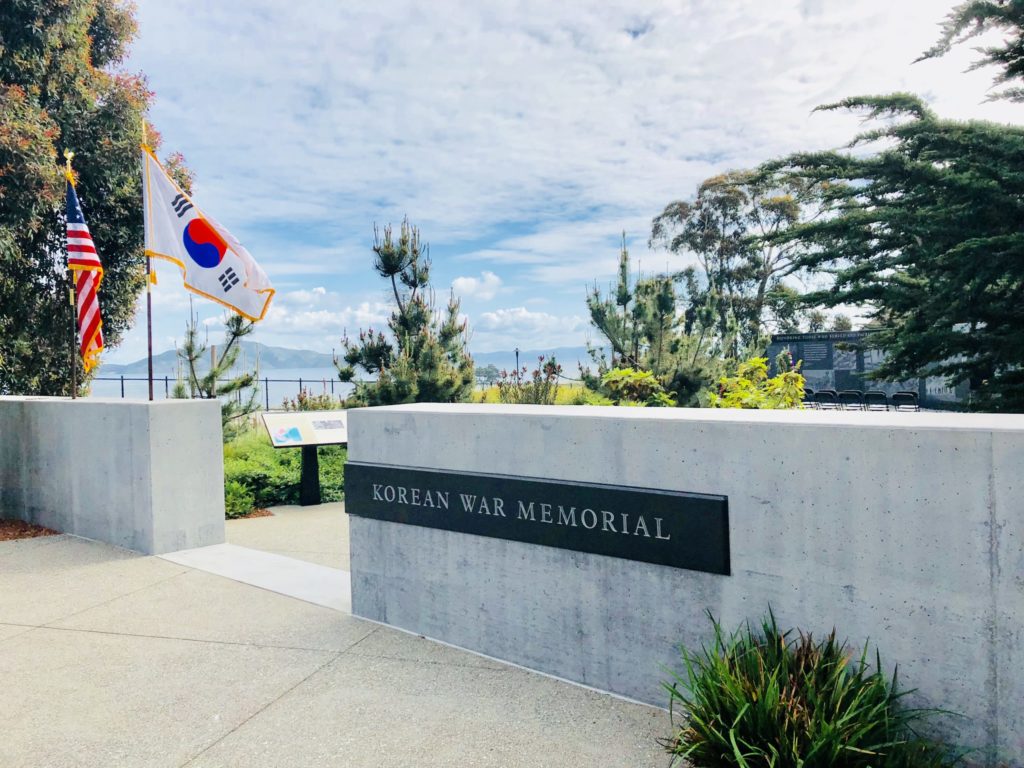
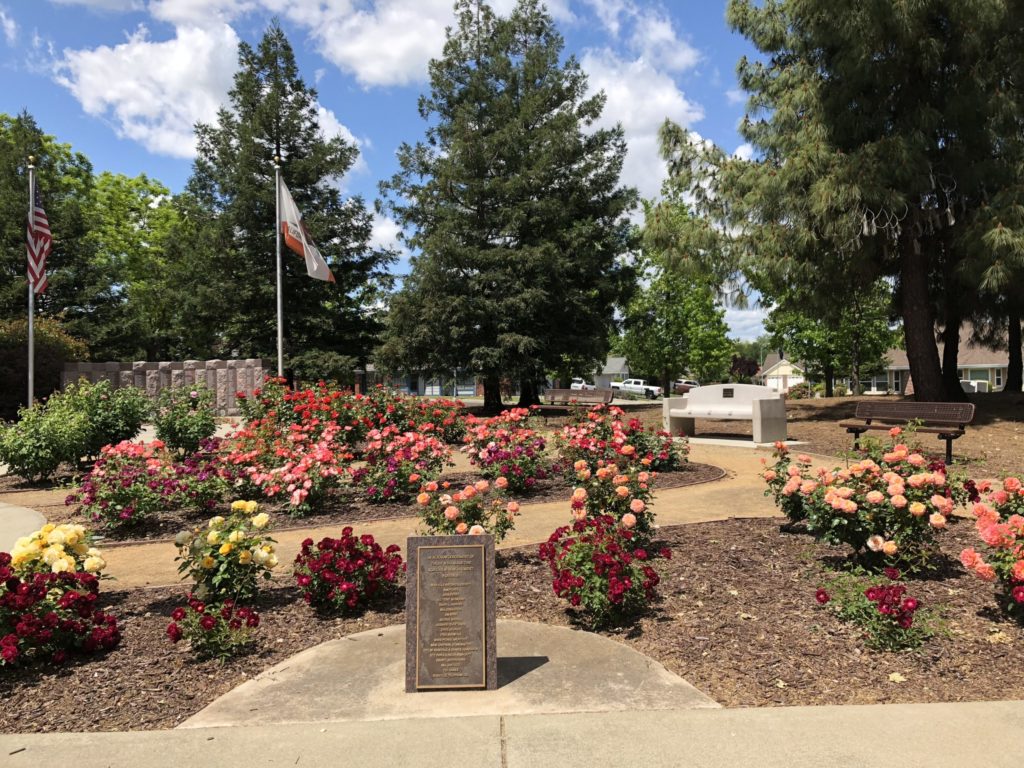
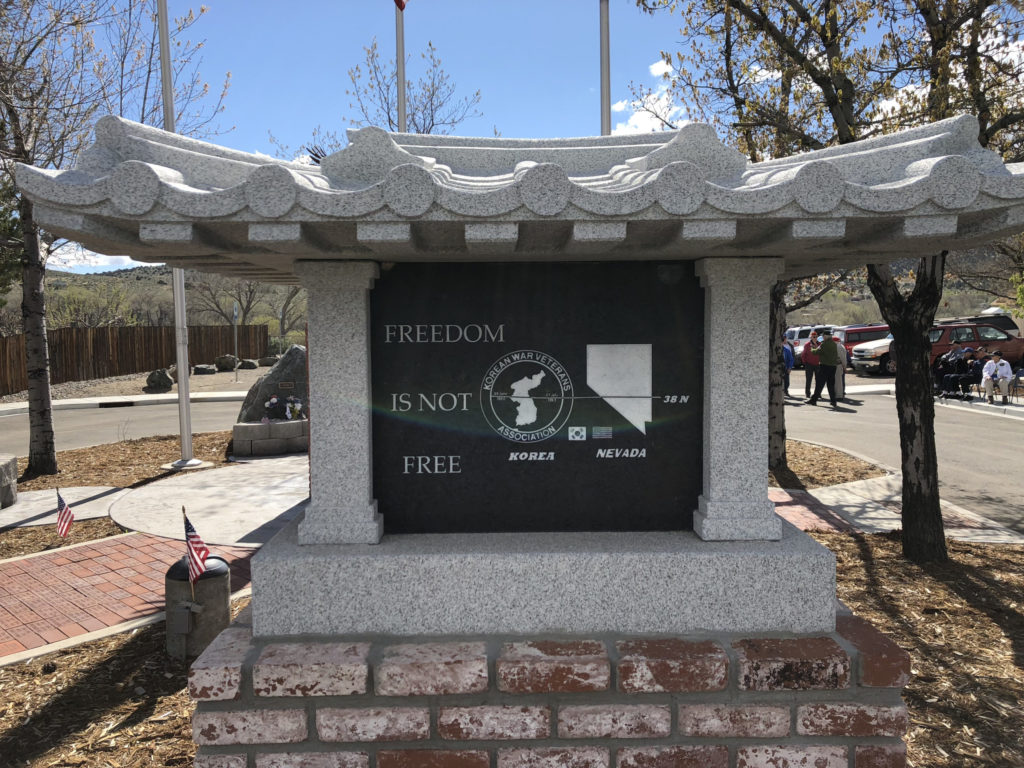
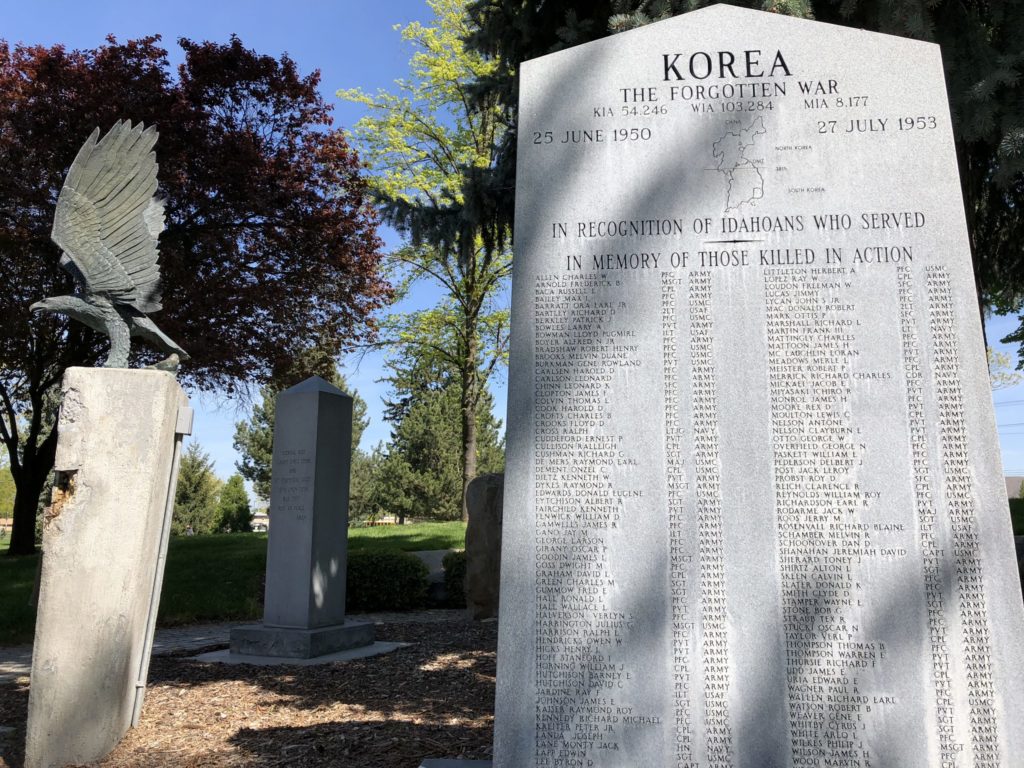
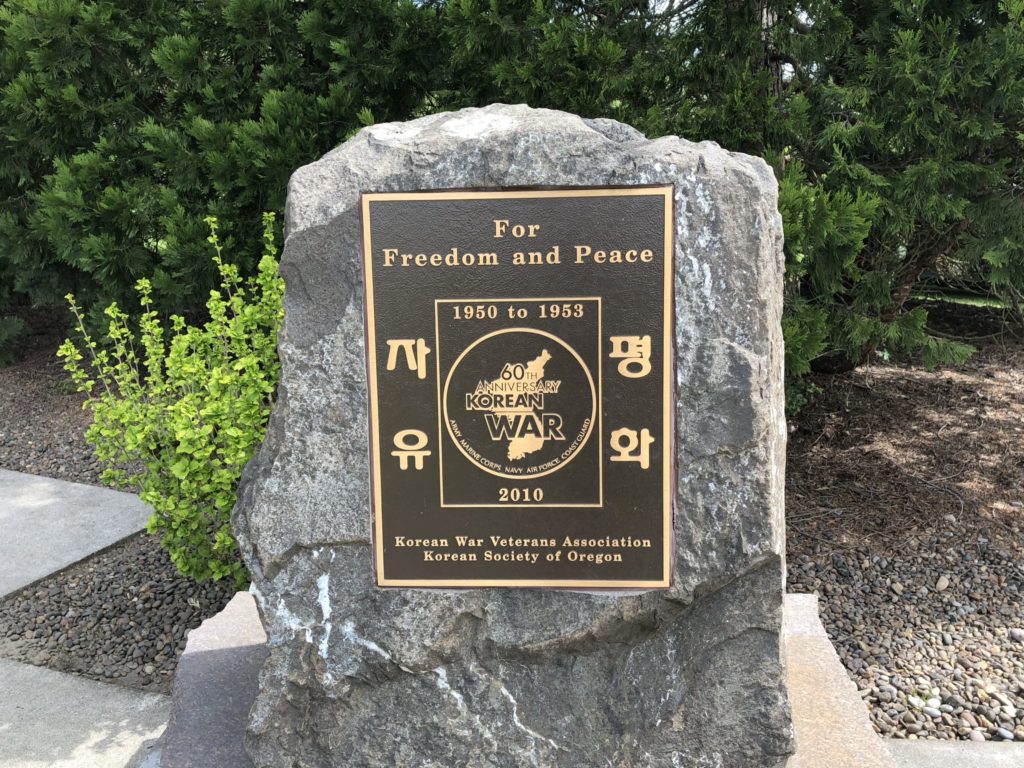
Click on a pin on the map above to visit a Korean War Veterans Memorial near you and pay tribute to the veterans and their fallen comrades. You can also explore these featured memorials and stories:

Featured Memorials

Featured Stories

[ININTELIGIBLE]
– My name is Javier Angel Morales. I am the past president of the 65th Infantry Veterans Association. I served for about 5 years. Our organization [inaudible]. And they were the ones who organized this whole association in 1936. At one time we had numbers of about 500 members. Now they only have about 150. They had to open up the association to allow veterans from other conflicts or wars to become members, because we want to continue the legacy that the 65th infantry gave to Puerto Rico. As to the Borinqueneers, there was a voluntary army, first [—] in 1917. They were all voluntary. They didn’t have to be drafted. The draft came in World War II. After World War II then came Korea. During the Korean War there were a lot of draftees. I could relate to some of the stories given to me by the different veterans, who were in smaller towns, but when they heard that there was a truck coming picking up those that would like to join the service, they jumped on the truck and were taken to [—-]. Some of them… one person told me that it was the fourth time he was trying to get in the truck, but they turned him down because his age was not the legal age to be drafted. [inaudible]. The regiment was composed of veterans that were from World War I and II. They had been volunteers and they were ready to retire, but they were asked to stay so they could train the new recruits, so most of them did that. That’s why I think the regiment was so…
– Experienced?
– So experienced during the first years of the war, that they were labeled [—-].
– How many served and how many suffered [—-]?
– The count that I have from Puerto Rico was about 63,000. Out of those 63,000, there were 2,700 that were wounded in action. There were about 740 that were killed in action, and out of those 740, there were 122 that were missing. Currently I think there’s about 110 or 112 that are still missing in action. And as they find their bodies or they’re able to identify them, they are added to the Wall of Remembrance in San Juan.
– So, if there’s… I know the 65th earned the congressional gold medal.
– Yes.
– Of course I’m partial, I know they deserved it, but not everybody knows. So, why?
– Okay. The regiment was very successful. They had a maneuver in Vieques called Portrex. They went against the best unit from the United States [——], and they were able to repel that invasion. So that stayed in the mind of Colonel Harris, and when Colonel Harris was in Korea, they asked him that they needed an infantry unit to be able to go to Korea because they were running short. So he said, “Well, I had a regiment I’d like to bring here.” and he mentioned the 65th infantry regiment. But they were… the high brass was very reluctant, because one of the things they said is, “But they never fought during World War I.” Only one battalion fought, which was the 3rd battalion. There were two casualties. And during World War II, they were mainly to secure… or security, of the different bases, of the different places in the Caribbean and in Europe. During the Korean War they were an infantry regiment, and they were well prepared because, like I mentioned before, a lot of them were veterans from World War II. They had experience, they had training necessary to be in battle. And so, that training went on to the new recruits that came in. When they got to Korea, they were instrumental in helping the 1st [—] division exit from the surrounding by the Chinese. Although the Chinese were pushing us back into the sea, the 65th regiment was the last unit to disembark, or to get on the boats, because they were the last ones that were safeguarding the back of all the other soldiers.
– Two last very simple questions. One is, you’re not even a Korean War veteran, why do you care about them so much? Okay? So that’s one. Two, tell the Korean people why they shouldn’t forget.
– When I was in the service, I was serving in Germany, and one of my fellow compatriots mentioned the 65th infantry. I never knew anything about the 65th. I wasn’t interested because I just wanted to serve my two years and leave. When I retired at 60, there was another instance, where I was in Connecticut and I overheard somebody say, “The 65th? They didn’t do anything right.” And that kind of stayed on my mind. I said, “I have to find out about that.” So, when I retired at 60, I said, “I need to go to Puerto Rico, because I want to see Puerto Rico.” [——–], and I did that. But before that, I told my wife and she started crying, and I said, “What’s the problem?” She says, “Well, you’re going to get old on me, and you’re going to die.” And I said… that scared me, and I said, “No, no, no. I have to do something.” So I came to Puerto Rico. Six months I went around the island. This time my brother was calling me. He says, “Look, I need you to help me.” And I said, “Help you what?” He said, “I need you to help me find veterans that were wounded, because I want to start an organization in Puerto Rico called The Purple Heart Organization, to be able to recruit and have a chapter, a register in the national Purple Heart Hall of Honor.” And I said, “Well, I’ll see what I can do.” Meantime, the president of the 65th infantry association was after me telling me the same thing, “Look, I need your help. You’re the youngest, and I need to make sure people don’t forget this organization.”
– So, to the Korean people, why should they not forget the Borinqueneers?
– To the Korean people, first of all I want to thank them very much, because I had the opportunity to go to Korea, and the 65th infantry was very instrumental in safeguarding the country. They were very instrumental in making sure that democracy was installed in Korea. They were very happy to be able to defend your country. A lot of them gave their rights [?], they shed the blood, and they shed the tears. But they did it for a purpose. They wanted you to be happy, your generations in the future to be happy, to be able to live in democracy. And so, the sacrifice that was made by the 65th infantry regiment was not done in vain, your country has progressed quite a bit, your people are very nice, and we really appreciate the way you think about us, the Puerto Ricans and the 65th infantry regiment.

>> Hello, everybody. I am back at the Belfast City Hall where the Korean War memorial proudly stands. I am here with the last remaining Korean War veteran, Grandpa Albert. Say, "Hello," and Ms. Carol Walker, who's been extremely instrumental in arranging everything today. She will tell you the story behind this memorial, how it got here and that there is another memorial in Korea, in Seoul, that honors the Irish Korean War veterans. So Ms. Walker ... >> Hi. >> Should we do a little ... We're going to loop around and then show you, so I just want to show you ... >> We just stay here. >> ... how it looks like. It honors the Royal Ulster Rifle, and, again, I love this inscription where it says, "The people that walk in darkness have seen the great light," from Isaiah, chapter nine, verse two, and then another ... So there's three sides that honor different ... So we're going to face way because I think this is prettier, so okay. So Ms. Walker, tell us how this memorial got here. >> Well, this memorial used to be in Korea. The soldiers themselves and [INAUDIBLE] Battle of Happy Valley. Actually ... >> Speak up. >> Oh, speak up? At the height of the battle in Happy Valley ... Afterwards, they decided, the commanding officer decided they [INAUDIBLE] something to commemorate the sacrifice of the 157 men that had made this great sacrifice at that particular battle, which as you can see from the memorial, it was on the 3rd and 4th of January 1951, so the padre set out on a task to go and find something, and he managed to come across a Korean stonemason. >> Mm-hmm. >> And they were able to get this beautiful pink Korean granite, polished granite, and create a memorial. It was on the field at the site, the battle site at Happy Valley on the 3rd of July in the 1950s, 1953, and at the service, there was a service that took place, and many of the soldiers themselves attended it, and they had the padre at the time, and he performed the sermoning, and the words that are on the memorial that you said, Isaiah, he actually used them as part of the scripture during the service that day and during the sermon, in the remembrance sermoning. Also they laid wreathes at the time, poppy wreaths like Albert has just laid. >> I do want to show this. >> They laid these wreaths to commemorate the 150 men that had made that sacrifice and that had died at the Battle of Happy Valley in trying to give Seoul the freedom. >> Oh, yeah. >> You can see ... >> Yes. >> ... it tells the story. >> Oh, it tells the story. I didn't realize that before. That's wonderful. >> But unfortunately, then what happened was after the Royal Ulster Rifles left Korea, there was nobody coming back to visit the memorial, and HMS Belfast, which is actually ironic that it was HMS Belfast, happened to be visiting Korea at the time in the '60s, '64, and it was decided then to bring back the memorial back to Northern Ireland so that the soldiers who were still alive from the Ulster Rifles could still have ceremonies and could attend remembrance services ... >> That is awesome. >> ... for their comrades. So it was brought back onboard HMS Belfast. It was brought to the [INAUDIBLE] barracks which was in Ballymena, and it was positioned there. Sadly then, Ballymena actually closed as an army base, and the memorial went into storage for a while, but people like Colonel Charley and Brigadier McCord at the time were instrumental in making sure that the memorial went somewhere important and had the honor that these men had bestowed wasn't forgotten, and the memorial was actually then given this very prominent place here in Belfast, and it has progressed over the years. It's been looked after. As Albert said, you know, there was a new path has been put in. People are able to come here and visit it, and the Ulster Rifles Association will come here and will hold memorial services and still remember the war dead oftentime. >> I guess I just want to show you that they put up that gate especially for this, you know, walkway because technically, this area right now, there's no pathway. That's the City Hall, and it is in a very prominent location. >> And it's so close to the cenotaph which is Belfast Cenotaph that's here to commemorate and honor the war dead of the First World War and the Second World War, and so it's still fitting to have it ... >> Very fitting. >> ... to have it so close to the cenotaph. >> So over there, Ms. Walker, pointing out the cenotaph honoring those who died in World Wars I and II, and it's literally ... You can see it from here, and this memorial is right here, and I just wanted to thank you because the one that's filming right now is the daughter of Colonel Charley, who was not only instrumental in getting this here, but in Korea, they now have a memorial honoring the Irish Korean War veterans. It's in Seoul. >> It's in Seoul at the National Museum, at the museum, because it's a very fitting site. It's where there's also memorials are from the Canadians, and all the other Commonwealth countries have now started as well on the back of what we did and what the Irish did with their memorial, and there's other countries, you know, from the United Nations have placed their memorials that are in a war memorial garden, and it means people can go and commemorate. The good thing is that every year, as well, the Irish, the Irish Embassy, still hold a remembrance service there and for people, so it's not forgotten. [INAUDIBLE] memorial, we spent a lot of time working out [INAUDIBLE], what shape it would look like, how the memorial would come about. It was decided that it wouldn't be a replica that we had here because it needed to reflect as it is today Ireland's [INAUDIBLE]. >> That's true. This was erected in 1951. >> And the Ireland that we are in today and we were in in 2012 when we started with the project was a very different Ireland. It was an Ireland that had started to come through the the peace ... >> Aw. >> ... process. >> Oh! >> [INAUDIBLE] >> Oh! >> I'm cold! >> I don't want him to freeze. This is Grandpa Albert, everyone. He's 91 years young, and his memory is impeccable, right? Oh, before we close, see, I wore this rifle green to match him, but can you sing [INAUDIBLE] for us? [Lyrics] [INAUDIBLE] >> Yay! Ninety-one years young. He's the last remaining Korean War veteran in Northern ... >> Well, one of the ... One of the last. >> One of the last Northern Ireland ... >> The last Irish one. >> Yes. >> He is. >> An Irish one. Many have passed just in the past month ... >> Yeah. >> Yeah. >> That's it. >> ... including Colonel Charley and ... >> Uh-huh. >> And many of the veterans that we were able to take back to Korea in 2013, many of them passed very quickly after their trip back ... >> Yeah. >> ... when you think about it. >> So I want to thank you because actually Ms. Walker is part of a different organization and association that remembers and honors those that died in World War I, right? >> Yes. >> Yes. >> World War I and World War II. >> World War II. >> And the Korean War as well. >> Yes. So thank you for bringing the [INAUDIBLE] as well of their memories, and thank you again to Colonel Charley's daughter, yay, Katherine, who is filming this video. So, everybody, thank you so much for joining me in both Ireland, all of Ireland now ... I will be on my way to Wales, so thank you. Thank you. Bye!
[FOREIGN LANGUAGE] >> My name is Vladimir Polage Arsenio. I was born in 1938, and I was born in a big, huge family. There were 11 children in our family. [FOREIGN LANGUAGE] >> My high gradation of high education, I came to Moscow to complete ... to continue my education. [FOREIGN LANGUAGE] >> When I entered college, I studied for 3 years. [FOREIGN LANGUAGE] >> And I had ... After graduation of college, I had to go to army to serve for the army. [FOREIGN LANGUAGE] >> I had a duty to go to army without any exceptions, and I was a 4th-year student at that time. [FOREIGN LANGUAGE] >> In '50s, 25th of July, there was a broke up in war at that time. [FOREIGN LANGUAGE] >> And the Soviet Union, the government of Soviet Union ... [FOREIGN LANGUAGE] >> ... didn't support, didn't want to support so much, so as we didn't have enough resources to support that situation. [FOREIGN LANGUAGE] >> After the army, I was ... I went to veterans service, special college for special technique, space kind of aircrafts, special. [FOREIGN LANGUAGE] >> We started equipment, military equipment, which would were not used yet because that was brand-new technologies. [FOREIGN LANGUAGE] >> After mutual agreement between North Korea and Soviet Union, there was no agreement for support, mutual support, but Kim Il-sung, he insisted Soviet Union to support in that war, in Korean War. [FOREIGN LANGUAGE] >> Stalin was the request of Mao Zedong and Kim Il-sung ... [FOREIGN LANGUAGE] >> ... by request made a decision to support North Korea ... [FOREIGN LANGUAGE] >> ... through a nation and special rated technical equipment with a lot of special military equipment. [FOREIGN LANGUAGE] >> In the beginning, Stalin thought that we will just give an equipment and not people, just give equipment, but people were not supposed to be involved in the war. [FOREIGN LANGUAGE] >> But when Koreans got that equipment, weapons, they couldn't work because that equipment was special on the radioactive airplanes, special. [FOREIGN LANGUAGE] >> The speed was really high speed. [FOREIGN LANGUAGE] >> And the [INAUDIBLE] radioactive technical equipment, it was not ... they were ... They couldn't have a ... They couldn't be involved in the war due to lack of knowledge, how to use that equipment. They couldn't fight with ... in the war. [FOREIGN LANGUAGE] >> So the Soviet Union made a decision ... [FOREIGN LANGUAGE] >> ... to give people and the technology and the equipment ... [FOREIGN LANGUAGE] >> ... the airplanes, pilots and [INAUDIBLE] all specialists who were involved who were high specialist to use who knew how to use those equipment and those high technology weapons. [FOREIGN LANGUAGE] >> There was a special ... They were created a special conference, which involved a lot of high ... a lot of group of ... Different group of, so to say, military, military as a group and a lot of high generals and, so to say, highly specialists, highly qualified specialists. [FOREIGN LANGUAGE] >> I can say begin ... to begin to shoot first, but ... [FOREIGN LANGUAGE] >> ... Americans helped South Korea a lot. They supported. [FOREIGN LANGUAGE] >> The purpose was to take over North Korea. [FOREIGN LANGUAGE] >> Then in the beginning, the North Korean army crossed ... [FOREIGN LANGUAGE] >> ... the border, and there were no any agreements. There were no any mutual discussions at that time. [FOREIGN LANGUAGE] >> [INAUDIBLE] in South Korea, and they were planning to use military methods to solve this issue. [FOREIGN LANGUAGE] >> Due to military political situation, happened that way. [FOREIGN LANGUAGE] >> We didn't want that North Korean could be under South Korea, could be taken over by South Korea, we didn't want, so this kind of actions already they were taken by the commander of chiefs ... [FOREIGN LANGUAGE] >> ... of all unified army by Douglas MacArthur. [FOREIGN LANGUAGE] >> He wanted to use the [INAUDIBLE] to ... [FOREIGN LANGUAGE] >> ... until they used the atomic weapon. [FOREIGN LANGUAGE] >> The government [INAUDIBLE] stopped him ... [FOREIGN LANGUAGE] >> ... and thought it will be a third World War, World War III, so Truman liberated the US MacArthur to ask him not to be a Commander of Chief over the American Army. [FOREIGN LANGUAGE] >> And the 38th parallel ... [FOREIGN LANGUAGE] >> ... the border between South and North Korea ... [FOREIGN LANGUAGE] >> ... in the end of war in 1951 ... [FOREIGN LANGUAGE] >> ... due to people came to realization that North and South, neither North nor South Korea won't be able to be winners in this. Nobody will be a winner. [FOREIGN LANGUAGE] >> So they decided to go into negotiation, and this negotiations were in effect until ... And prolonged until 27th of July of '51, 1951. [FOREIGN LANGUAGE] >> Everyone understood that from the ... [FOREIGN LANGUAGE] >> ... Soviet Union was behind the North Korea, and South Korea was supported by the United States of America, and understood that two super countries were involved in this war, and everyone understood that. [FOREIGN LANGUAGE] >> [INAUDIBLE] result, so ... [FOREIGN LANGUAGE] >> ... my involvement into the war, I was the main specialist on the radioactive weapons ... [FOREIGN LANGUAGE] >> ... stations. [FOREIGN LANGUAGE] >> That's radioactive stations were used for the first time in history in Korean War. [FOREIGN LANGUAGE] >> I was a specialist to provide on those radioactive stations, and they were included special batteries inside those stations. [FOREIGN LANGUAGE] >> There were three batteries, and in the division there are three groups of soldiers so in every [INAUDIBLE] ... [FOREIGN LANGUAGE] >> ... there were three stations. [FOREIGN LANGUAGE] >> So there were eight guns, special guns, but they have are very powerful. [FOREIGN LANGUAGE] >> My task was to provide security for the area which we're protecting, so the North Korea. [FOREIGN LANGUAGE] >> There were special [INAUDIBLE] for far vision to recognize the enemy from the far aside. [FOREIGN LANGUAGE] >> And those stations, when they recognize the enemies coming from the south [INAUDIBLE] and American weapons and ammunitions were very strong. B-29 probably you might know, and the special airplanes, using the airplanes the [INAUDIBLE] F-86 if you have known. [FOREIGN LANGUAGE] >> So that kind of military special aviation is ... And that special station recognizes from far away distance, and you saw the information through the radiation station, weapon station. When they get these information details, call the ... [FOREIGN LANGUAGE] >> They provide special indicators, special, so to say, indicators, and their location. [FOREIGN LANGUAGE] >> When they arrived to get the purpose to go there to realize their purpose. [FOREIGN LANGUAGE] >> The station ... [FOREIGN LANGUAGE] >> ... radiation station that recognizes them, it has already their coordinates, their, so to say, [INAUDIBLE]. [FOREIGN LANGUAGE] >> So we had a special also another equipment that could really calculate special, so to say, calculate their speed and whatever that they can make the ... meet in the air to, so to say, fight. [FOREIGN LANGUAGE] >> But this kind of lesson is not the only one. [FOREIGN LANGUAGE] >> The special task of that military group is prevent and protect, not let this enemy's aviation to bomb, to be able to bomb ... [FOREIGN LANGUAGE] >> ... prevent from the bombing. [FOREIGN LANGUAGE] >> So there was a second method to ... of the protection. That is fire. [FOREIGN LANGUAGE] >> All weapons were constructed in a space ... [FOREIGN LANGUAGE] >> ... and all the weapons shoot that special space, and the pilots see that hurting, and he make decision to break, and then the enemy's airplane would be destroyed absolutely ... [FOREIGN LANGUAGE] >> ... no way to survive. [FOREIGN LANGUAGE] >> So when they saw that special kind of equipment, they just turned around and went back. [FOREIGN LANGUAGE] >> They bombed different area, not the area that they wanted ... that they had in their original purpose to do. [FOREIGN LANGUAGE] >> So this kind of war we had of that special group of high technology weapon ... [FOREIGN LANGUAGE] >> ... my task was to provide that all these mechanisms, all these weapons could really work absolutely, 100 percent perfectly. [FOREIGN LANGUAGE] >> Next, as for aviation ... [FOREIGN LANGUAGE] >> ... when the enemy's aviation came out, then our pilots also flew on the sky. [FOREIGN LANGUAGE] >> They just go to meet them. [FOREIGN LANGUAGE] >> And there is a air war. [FOREIGN LANGUAGE] >> This is the masses of pilots shooting really highly and Russian airplanes were in Korea, MiG-15. Yeah, the ... [FOREIGN LANGUAGE] >> On American side ... [FOREIGN LANGUAGE] >> ... F-86, the system Sabre. [FOREIGN LANGUAGE] >> Air war, you can imagine that what it is like. [FOREIGN LANGUAGE] >> As a matter of fact, the one who is leading or who is follower, leader and the follower, they are like one pair. [FOREIGN LANGUAGE] >> It used to be ... That kind of tactic is used to be not just in Soviet military system, but also Americans used that method too. [FOREIGN LANGUAGE] >> The task is ... [FOREIGN LANGUAGE] >> ... of the follower, the task of the follower is to be involved with the fight, but the leader shoot, protect ... [FOREIGN LANGUAGE] >> ... his tail, so to say, that Americans wouldn't be able to shoot and to hit, to shoot the air. [FOREIGN LANGUAGE] >> So what do the special [INAUDIBLE] ... [FOREIGN LANGUAGE] >> ... weapons [INAUDIBLE] was Americans decided that they lost the war, and half of them leave. [FOREIGN LANGUAGE] >> Our pilots come back to their airports. [FOREIGN LANGUAGE] >> When they were landed, American airplanes came suddenly, unexpectedly came out from somewhere. [FOREIGN LANGUAGE] >> And when the pilot already lost his everything, lost his control because it's unexpected situations, so, of course, in this case, usually American pilots, they hit, and they shoot, and the Soviets, Russians, they drive off course. [FOREIGN LANGUAGE] >> And for this, there were special guns. [FOREIGN LANGUAGE] >> When they see our airplane come to land, and those [INAUDIBLE] special weapon shoot that American airplane, and it just ... [FOREIGN LANGUAGE] >> They shoot, so in this ... From this perspective, that landing weapon specialist, they were very successful and very helpful from that perspective. [FOREIGN LANGUAGE] >> So this manner of war happened every day, so I've been involved with this work for 6 months, 6 months, no rest, only war, 6 months. [FOREIGN LANGUAGE] >> What was the danger time. [FOREIGN LANGUAGE] >> When that landing special equipment working to prevent from the enemy's airplanes ... [FOREIGN LANGUAGE] >> ... it was a danger. [FOREIGN LANGUAGE] >> We shoot our own soldiers due to the small pieces of weapons they coming back, so there is a danger like that. [FOREIGN LANGUAGE] >> So this way ... [FOREIGN LANGUAGE] >> ... there was ... had happened the war. [FOREIGN LANGUAGE] >> First time in the history, air war ... [FOREIGN LANGUAGE] >> ... was used. [FOREIGN LANGUAGE] >> Air war was used in Korean War ... [FOREIGN LANGUAGE] >> ... for the first time. [FOREIGN LANGUAGE] >> The main military weapons highly technology ... [FOREIGN LANGUAGE] >> ... were used. [FOREIGN LANGUAGE] >> From night to night, they began to use them, which there were pilots fighting whenever support special landing military highly equipment supported a lot that pilot to protect them. [FOREIGN LANGUAGE] >> So after all the fighting, the battles, in 1953, on July 27th, the Armistice Agreement was signed. Can you explain a little bit about what he remembers about the armistice? [FOREIGN LANGUAGE] >> When made a decision to stop, they fired ... [FOREIGN LANGUAGE] >> ... part of a mission. [FOREIGN LANGUAGE] >> We were on the Chinese territory and the other part of the Korean territory. [FOREIGN LANGUAGE] >> We were on the Korean territory. [FOREIGN LANGUAGE] >> And our main task was to protect and object of the state of military manner. That was the breach from the [INAUDIBLE]. [FOREIGN LANGUAGE] >> That was [INAUDIBLE] from ... when from China came weapons and products. All this came from China to the Soviet Union. [FOREIGN LANGUAGE] >> So Americans knew about the value of this breach, and they tried to do everything to destroy it. [FOREIGN LANGUAGE] >> The second object that was protected by the North that the stations, that the [INAUDIBLE] was on the Yauza River, provided a northeast part of China, part of Manchuria that was stationed very valuable ... [FOREIGN LANGUAGE] >> ... important, and American military offices, generals, they really understood the importance of that object as well. [FOREIGN LANGUAGE] >> The third task for the aviation to provide ... [FOREIGN LANGUAGE] >> ... transportation inside the territory, so the soldiers couldn't wear, couldn't carry the weapons in their pockets, so there should be ... They're supposed to fly it and protect ... fly the weapons, special weapon soldiers ... [FOREIGN LANGUAGE] >> ... through the river and through the land. [FOREIGN LANGUAGE] >> It was also another task for their aviation and sent special land soldiers group. [FOREIGN LANGUAGE] >> And when they came to agreement on 27th of July in Panmunjom ... [FOREIGN LANGUAGE] >> ... you've heard about it. [FOREIGN LANGUAGE] >> From the North Korea and South Korea and from the American ... [FOREIGN LANGUAGE] >> ... nobody ... Not everyone signed this agreement, not everyone. [FOREIGN LANGUAGE] >> But still, the kind of stopping ... to stop war to make some peace. Actually, it began to act. [FOREIGN LANGUAGE] >> It was considered, this period of time political powers as well as the leaders of other states would ... [FOREIGN LANGUAGE] >> ... would begin more deep work on agreement for a long, long time to make peace. [FOREIGN LANGUAGE] >> But it didn't happen. [FOREIGN LANGUAGE] >> So as a matter of fact, we have 64 years now, 64 years we live no war, no peace. [FOREIGN LANGUAGE] >> And there is [INAUDIBLE]. [FOREIGN LANGUAGE] >> There is no [INAUDIBLE]. [FOREIGN LANGUAGE] >> But the next leaders who came after these leaders, they still did not came to agreement. [FOREIGN LANGUAGE] >> So my personal opinion is in my opinion from the political point of view the coalition in South Korea or in the North Korea, but according to the territory, the [INAUDIBLE] is the same so this is nonreason ... [FOREIGN LANGUAGE] >> ... another one that life in South Korea ... [FOREIGN LANGUAGE] >> ... is more high in terms of welfare and the prosperity. [FOREIGN LANGUAGE] >> And everyone wants to unite, but everyone has [INAUDIBLE] ... [FOREIGN LANGUAGE] >> The South ... No one wants to unite based upon the socialism, but South wants to unite based upon ... democracy, exactly, right. [FOREIGN LANGUAGE] >> So ... [FOREIGN LANGUAGE] >> And [INAUDIBLE] that we don't have this agreement still now, and the result of this war are [INAUDIBLE]. [FOREIGN LANGUAGE] >> Over 9 million people died in this war. [FOREIGN LANGUAGE] >> And two third part of them is local people. >> The Koreans. >> Inhabitants, the civil people. [FOREIGN LANGUAGE] >> I can say that Americans and South Korea, they lost over 500,000 people. [FOREIGN LANGUAGE] >> Chinese, China were 1 million people. [FOREIGN LANGUAGE] >> UN, 500,000 people. [FOREIGN LANGUAGE] >> Soviet Union also lost approximately 300,000, 220 pilots and others, the special soldiers who were controlling that equipment from the land. [FOREIGN LANGUAGE] >> A lot of airplanes were shot for all kind of different kind of airplane, the 86, the 89 [INAUDIBLE], 86, all different type of airplane. [FOREIGN LANGUAGE] >> One thousand two hundred airplanes were shot in that war. [FOREIGN LANGUAGE] >> And that special land support soldiers, they shot 200 airplanes. [FOREIGN LANGUAGE] >> So we had 305 people, yeah? [FOREIGN LANGUAGE] >> And from the landing, approximately 70 people, those who were providing with the special equipment from the land soldiers, the specialists, greater technical specialists. [FOREIGN LANGUAGE] >> So this is the result of the war, and nothing about the economical loss from the economical perspective. [FOREIGN LANGUAGE] >> We can say that in the beginning that this is a civil war between South and North, but actually it became the political powers also were involved. [FOREIGN LANGUAGE] >> Now I can answer all your questions. >> What ... [FOREIGN LANGUAGE] >> If I didn't say something, so you're welcome to ask them. >> So the war hasn't ended. Do you think ... Do you have hope that it could end in the future and there will be peace be two Koreas? [FOREIGN LANGUAGE] >> It's hard to say at the moment. [FOREIGN LANGUAGE] >> I have a hope that it can be, but so I thought in many international conferences and congresses. [FOREIGN LANGUAGE] >> But I can make [INAUDIBLE] for the nearest future to come to agreement for the South and for the North Koreans it's quite difficult unfortunately. [FOREIGN LANGUAGE] >> Have you visited either North or South Korea? [FOREIGN LANGUAGE] >> I've been to Seoul in South Korea at the International Conference. [FOREIGN LANGUAGE] >> It was dedicated to world peace, and one issue was about the unification of North and South Korea, and I spoke in my report on this special conference. [FOREIGN LANGUAGE] >> And I tried ... I insisted to state, the leaders of the states of the South and North Korea listen to their people and make a decision to unite. [FOREIGN LANGUAGE] >> After my speech in that conference ... [FOREIGN LANGUAGE] >> I got ... I received an international diploma as an ambassador for peace, very big, very beautiful one. >> Thank you because I ... [FOREIGN LANGUAGE] >> ... because the more people like him advocate for peace, maybe the leaders will listen. [FOREIGN LANGUAGE] >> I don't give up on the theme about Korea still. [FOREIGN LANGUAGE] >> I have a lot of articles that are devoted to problem of Korea, Korean War, so I give you as a gift the copy of my articles. [FOREIGN LANGUAGE] >> Maybe I couldn't [INAUDIBLE] ... [FOREIGN LANGUAGE] >> So you can find in my articles full answers. [FOREIGN LANGUAGE] >> One more important moment I want to say, once ... [FOREIGN LANGUAGE] >> From one Korean professor from Korean university, I was ... came to my home. [FOREIGN LANGUAGE] >> So we were talking just like [INAUDIBLE]. [FOREIGN LANGUAGE] >> He took pictures. [FOREIGN LANGUAGE] >> He took all materials, everything I had at home about Korea, and he said, he promised that they will write article with ... use my opinion and so on and so forth, so where are they? [FOREIGN LANGUAGE] >> They didn't give any contact to me, and I don't know who did I talk to. [FOREIGN LANGUAGE] >> They give me some business cards. [FOREIGN LANGUAGE] >> I have their contact, but nothing happened after that. [FOREIGN LANGUAGE] >> No ... There is no contact with them, no connections unfortunately. >> I will keep in touch with him. [FOREIGN LANGUAGE] >> Why does he care ... Ask him, why do you care so much about Korea? Does his friends and comrades care about Korea too? [FOREIGN LANGUAGE] >> Because Korean War was the worst bloodless, bloody war, a lot of blood. [FOREIGN LANGUAGE] >> I saw a lot of blood, a lot of tears, a lot of fire. [FOREIGN LANGUAGE] >> And all these disasters, I experienced all these things, and I'm against any war, and I don't ... I can't agree with kind of disagreement that's going on, the kind of fake agreements that exist between these two countries. I can't agree with that. I want to finish that, want to make it peace. [FOREIGN LANGUAGE] >> And now I am as an ambassador of peace, I really provide that peace policy among youngsters at the moment. [FOREIGN LANGUAGE] >> I am very mad about this Korea that's going on now and a lot of people dying, and we can't do nothing. [FOREIGN LANGUAGE] >> All the time that no man would have conflicts, so war is going on. [FOREIGN LANGUAGE] >> Usually, all wars, they end with a certain agreement, certain document. [FOREIGN LANGUAGE] >> And all issues were discussed at the table during the negotiation between two or few countries. Usually this is the way supposed to be after the end of the war. [FOREIGN LANGUAGE] >> Here is pictures where the conference were dedicated the unification for the Korea, unification between Korea, South and North Korea. That's conferences were dedicated to Korea issue, especially unification, so ... >> Can he explain a little bit about his medals. [FOREIGN LANGUAGE] >> This is professor [INAUDIBLE]. He's a professor. He gave me this business card. He is a professor in Seoul. He took a lot of materials from me. >> When? [FOREIGN LANGUAGE] >> This is Dr. Bohim Pak. [FOREIGN LANGUAGE] >> This is Dr. Bohim Pak. [FOREIGN LANGUAGE] >> Two years ago. [FOREIGN LANGUAGE] >> Two years ago. >> Explain to me a little bit about your medals. [FOREIGN LANGUAGE] >> These two medals the Chinese, that's from China. [FOREIGN LANGUAGE] >> We had an agreement with China, an agreement about mutual support, but Korea, though we had an agreement, they didn't give us any medals. [FOREIGN LANGUAGE] >> I don't have any medals from Korea. That's why. >> From the North. >> From North Korea, yeah. [FOREIGN LANGUAGE] >> But I really fought really earnestly with all of my heart for the freedom of Korea and Korean people. [FOREIGN LANGUAGE] >> As for the other medals, are from the World War II, and after the war, I finished. I graduated the Moscow Engineering Institute. [FOREIGN LANGUAGE] >> I work in the naval, military naval. [FOREIGN LANGUAGE] >> I was a main specialist to provide assistance ... [FOREIGN LANGUAGE] >> ... for ... to protect humans' in enclosed space. >> I have another question. Do other veterans of the Korean War in Russia share his views and his hope for unified Korea? [FOREIGN LANGUAGE] >> Have a section of veterans of Korean War. [FOREIGN LANGUAGE] >> The head of this section is the general Karovich. [FOREIGN LANGUAGE] >> He's a Hero of the Soviet Union. Did you hear his name? >> The Heroes Club. >> The Hero, the club, yes. [FOREIGN LANGUAGE] >> I was a member of that club. [FOREIGN LANGUAGE] >> I tried to get any memories from other scholars, with other veterans [INAUDIBLE] successful as people lost their memories, and now over 90 years old, and most of them can't walk. They are lying in bed. [FOREIGN LANGUAGE] >> And when I was working in the interest of Navy interest, military, naval ... [FOREIGN LANGUAGE] >> [INAUDIBLE] I got PhD on technical sciences on that issue. [FOREIGN LANGUAGE] >> And I successfully worked on that kind of system, on using that system, developing that system? [FOREIGN LANGUAGE] >> So atomic submarine is able to be 24 hours underground safe instead of 1 or 2 hours. >> One more question. [FOREIGN LANGUAGE] >> Today, we went to the memorial. [FOREIGN LANGUAGE] >> I saw World War ... [FOREIGN LANGUAGE] >> I saw World War I memorial, two World War II memorial ... [FOREIGN LANGUAGE] >> So here he said that after he has finished his work, some of his comrades, but they are from naval comrades, they gave him that kind of a letter of gratitude, and he would like to give it to you too because they have written here some information about him and about his work and about everything. >> Yes, going back to the memorial, I visited World War I memorial, World War II memorial, the UN memorial and the International Soldier Memorial. [FOREIGN LANGUAGE] >> And I was ... [FOREIGN LANGUAGE] >> I go very often there to that memorial all the time. >> Me too, in Washington, DC, I go to the memorial all the time. [FOREIGN LANGUAGE] >> He wants to continue about medals. >> Oh, oh. [FOREIGN LANGUAGE] >> He has five medals from military naval. >> Oh. [FOREIGN LANGUAGE] >> And very universals medals, which were dedicated to generals, Admiral Gorshkov and specialty top leaders, top commanders in chief from the military. They're from World War II, so ... [FOREIGN LANGUAGE] >> In general, he has 22 medals from the government and from the different state medals ... [FOREIGN LANGUAGE] >> ... and more than over 10. He has special appreciations signs like medals, some kind of medals and as a type of medal. They're high enough level of appreciation medal, special medals, and there are ordinary medals. [FOREIGN LANGUAGE] >> I'm an honored inhabitant of Moscow City. >> I'm honored to meet you. [FOREIGN LANGUAGE] >> So going back to the memorial ... [FOREIGN LANGUAGE] >> ... in the United Nations memorial, I saw four statutes, one Soviet soldier, Russian soldier, American soldier, British soldier and French soldier against Hitler. [FOREIGN LANGUAGE] >> So I was very sad ... [FOREIGN LANGUAGE] >> ... because 5 years later in the Korean War, the people that fought together in World War II had to fight against one another. [FOREIGN LANGUAGE] >> That is war. [FOREIGN LANGUAGE] >> I hope that ... [FOREIGN LANGUAGE] >> ... this war will end, Korean War will end, and there will be peace, and there will be reconciliation and that ... I call all the veterans my grandpas. I call all the veterans of the Korean War my grandpas. [FOREIGN LANGUAGE] >> I hope ... [FOREIGN LANGUAGE] >> ... that my American grandpas and he be friends. [FOREIGN LANGUAGE] >> We are good friends. Please, look. >> Because he was a general, right? [FOREIGN LANGUAGE] >> General. [FOREIGN LANGUAGE] >> Yes. [FOREIGN LANGUAGE] >> Please, look at his hands. [FOREIGN LANGUAGE] >> Look at his hands. >> So I would like to call him my grandpa too ... [FOREIGN LANGUAGE] >> Yes, you are welcome, please. >> ... because we are fighting for peace together in Korea. [FOREIGN LANGUAGE] >> That's right, very good. Yes. >> I'm going to go and hug him. [FOREIGN LANGUAGE] >> I want to say a few words. >> Oh, okay. >> May I say a few more words, please? [FOREIGN LANGUAGE] >> We old generation, we made a lot of things. [FOREIGN LANGUAGE] >> We fought against a system. We won, and I hope that giving our, sharing our traditions, Russian and American friendship, people, youngsters, please, take charge in your hands and do everything to stop war, to finish all wars all over the world. This is what I teach, youngsters. [FOREIGN LANGUAGE] >> Thank you. [FOREIGN LANGUAGE] >> Thank you.

– Yo me llamo Hernando Villegas Hurtado, viajé a Corea impulsado por la aventura, porque en todas las noticias y todo lo que nosotros sabíamos que Corea era de la guerra, y nos, a mí particularmente, me entusiasmó mucho viajar hasta allá, y fui voluntario. Salimos a finales de septiembre de 1952, y regresamos en octubre de 1953. Yo con el… estuvimos… después del entrenamiento, yo entré al batallón de sanidad, era enfermero, fui enfermero, y pasé todo el tiempo en… atendiendo heridos y rescatando muertos. Destaco de todo eso, pues, también el cerro 180, que me tocó sacar un poco de gente de allá, y, por supuesto, el Old Baldy, que también fue bastante duro, pero, sobre todo, los 12 días que nosotros permanecimos en el Old Baldy, desde el 10 de, desde el 10 de marzo hasta el 23. Esos para mí fueron un infierno, porque todos los días, de día y de noche, hubo fuego de artillería de los coreanos. En ese tiempo estaban tratando de ganar terreno por la proximidad que existía del armisticio, entonces, querían estar en buena posición, tengo entendido yo, buena posición geográfica para que les rindiera más el terreno. Fue muy duro para mí, demasiado duro, tan duro hasta las lágrimas, porque me tocó rescatar a varios compañeros que eran muy amigos, sacar muchos heridos, y participar en dos o tres patrullas… una patrulla que llaman de reconocimiento y escucha que llegaba a un valle a donde podíamos dispararle con la pistola a los chinos, porque casi todos eran chinos en ese momento, y entonces, pues, fue muy duro esa semana, esa semana no, esos 12 días, 12 días que permanecimos nosotros, no se me van a olvidar nunca en mi vida. Pero también, pues, las enseñanzas que uno va derivando de todo lo que le pasó. Afortunado que no me dieron, afortunado porque… porque gracias a la, estar en Corea cambió totalmente mi vida. Cuando yo vivía aquí en Colombia, vivía en un pueblo, en una ciudad que llaman Pereira, pero, pues, no sabía hacer nada, trabajaba con papá en labores propias de, del campo, y el viaje a Corea cambió totalmente, totalmente todo, yo todavía me… me maravilla el cambio que dio mi vida, el cambio que le pude dar a mi familia. Pero fue por la fortuna de haber viajado, más bien por la aventura, pero después fue una enseñanza, fue una enseñanza. Ya cuando llegamos ambas Coreas estaban arrasadas, la una por la invasión de los coreanos del norte y por la invasión china, y los otros por la, por repeler la invasión y llegar casi hasta el río Yalu con el generalMacArthura la cabeza.En mi, en mi parecer, si quiera salió MacArthur, porque posiblemente habría armado una tercera guerra mundial. MacArthur era guerrerista, y quería salir, no sé si habrá oído hablar de él, pero era un, un general que tenía mucha influencia, no solamente en Estados Unidos, si no en todo el mundo era muy respetado. Y entonces, pues, él quería seguir la guerra hasta arrojar a los chinos a su China e invadir parte de China. Eso no ocurrió. ¿Y qué, y qué enseñanza ha sacado uno de allá? Pues, sencillamente que todos perdimos. Perdió Corea del Sur, perdió Corea del Norte. Hubo millones de… yo no sé cuántos millones puedan haber perdido la vida allá, y cuántos heridos, pero muchos, fue muchos. Y, y quedamos en las mismas, solo que Corea del Norte y Corea del Sur estaban arrasadas, totalmente arrasadas. Yo tuve la oportunidad de viajar a Corea ahora en noviembre. Transformada totalmente, increíble el avance que ha tenido Corea, y eso me hace sentir muy orgulloso y muy complacido de que, de que haya, en primer lugar, que nos hayan invitado, estoy muy contento. Fui con, con dos hijos, entre ellos una, una niña, estuvieron encantados, muy contentos. Y, y, por su puesto, supremamente agradecidos de las atenciones y de la forma como se portaron con nosotros admirablemente. Ambos muchachos, pues, ya no son muchachos, ya son viejos, bueno, ambos muchachos salieron contentísimos con el viaje, muy maravillados y muy contentos. Y se consideran que, es la mejor experiencia que han tenido en la vida. Pero, particularmente, yo pienso que, sigo pensando que la guerra, todas las guerras son malas. Yo soy pacipista, pacipista a morir. Y, normalmente, las guerras las hacen las potencias. Por países pequeños como Colombia, o como Corea en ese tiempo… sí… de esas potencias. Estados Unidos que quería seguir interviniendo en Corea, lo hizo muy bien, y de Rusia y China que querían también intervenir en Corea del Norte. Ambos países tenían sus motivos políticos, aunque no motivos humanos. Eso como que no les interesaba, absolutamente nasa. Ver a un, a una persona, a un soldado o a varios soldados incendiados con napalm, eso es una experiencia aterradora, aterradora. Uno dice: “¿Cómo puede ocurrir algo así? ¿Cómo puede ocurrir algo que, así, que, que un humano le esté tirando candela o gasolina o napalm a otro ser humano y que arda en llamas?”. Me duele mucho haber visto eso, no quisiera haberlo visto. Por otra parte, estoy suprema, supremamente agradecido con Corea. Y no solamente porque, pues, con la forma que me ha tratado, si no como le ha ayudado al gobierno y al país, con obras, con educación, con muchas cosas que nosotros no teníamos, pero que Corea nos ha, nos ha brindado, especialmente en el aspecto, por ejemplo, el, con Coica, por ejemplo. Coica es una magnífica entidad, y nos va a servir mucho a nosotros… de Bogotá, en diferentes partes del país, y aquí mismo en Bogotá, con el hospital para… ¿qué más le cuento yo? Muy contento, una experiencia, pero lo mejor es que. Yo fui casi analfabeta a, o mejor dicho, analfabeta, a Corea, y el regreso de Corea me permitió que me recibieran en una buena empresa, que estuviera, que terminara mi primaria, mi bachillerato y la universidad, y que en este momento esté en una situación, digamos, cómoda y tranquila. Vivo muy muy muy agradecido de Corea, muy contento de haber ido. Y no tengo si no agradecimientos totales para con todos ustedes, para todos. Y mis hijos sí que lo tienen. Todos están muy contentos y, sobre todo, muy orgullosos.

>> Hi, everybody. I am here at the Veterans Affairs Department with, ta-da, my American-Samoan and Korean-War grandpas and their families, so I’m going to introduce you to them. So you met yesterday the Veterans VFW state commander, Inafo Maria.

>> Hello.

>> Aloha, right? And then the post commander, Mr. Apu.

>> Hi.

>> Okay. So here is my veteran grandpa. You can come a little closer. Your name is …

>> Suaka Shushba.

>> Yes. Grandpa Sua was in the Air Force, which is very rare, in 1950 …

>> Two.

>> 1952, so he flew to Korea carrying a …

>> Atomic bomb.

>> He carried an atomic bomb, but thank God, yeah, thank God he didn’t have to drop it, right? Yeah. If I remember correctly, General MacArthur kind of wanted to drop it, huh?

>> Wanted to drop it.

>> Yeah, but thank God that didn’t happen because Korea then would not exist today, maybe. Yes, and maybe I wouldn’t exist, so thank you for not dropping it.

>> [INAUDIBLE] protect Korea.

>> Yes. Thank you. Thank you. Look how young he looks. How old are you, Grandpa?

>> I’m 87 years old.

>> Eighty-seven, he’s looking young though.

>> He’s too young.

>> Yes. Now this is my second Korean-War-veteran grandpa with his lovely girlfriend and son, handsome son, right? Grandpa, your full name?

>> [INAUDIBLE].

>> Yes. It’s a little bit long, but for short, I will call you my Grandpa … first name …

>> Beneva.

>> Beneva, Grandpa Beneva. He has an impeccable memory, and he was a combat veteran, right?

>> Yeah.

>> He served in some of the major battles of …

>> Outpost Harry.

>> Outpost Harry with the Greeks.

>> Pork Chop Hill.

>> Pork Chop Hill. Oh, by the way, everybody, do you have the … Well, he doesn’t have it, but he’s part of the Indianhead, the second ID. There’s a lot of Indianhead people watching this. So, “second to none,” right?

>> Second to none.

>> Second to none. Yes, yes. That’s it, so thank you, and what’s your name?

>> Gilbert Fiere.

>> Okay. What does it mean for you to have a father who served in the Korean War?

>> I’m very proud of my dad. He inspired me to join the service as well, and so I’m very proud of him.

>> Where did you serve?

>> First Persian Gulf War.

>> Oh, thank you for your service too. Thank you. Okay. Well, he’s not a Koren War veteran.

>> Nope.

>> As you can see, he’s not that old, but his father …

>> Yes.

>> His father was a Korean War veteran, and your father’s name is …

>> Edwin Robert Hollister.

>> Yes. Mr. Grandpa Edwin, he too also served in Desert Storm, so we have many families. Many of the members of the family served in the military and American Samoa. Per capita, right, number one, per capita, number one, and they have the spirit of serving the country, duty freedom, right, family, protecting family.

>> Yes.

>> And so your father served what year, you said?

>> 1950 …

>> 19 …

>> … until 1953, somewhere that time.

>> Yeah, yes, and he served in the Army.

>> Army, yes.

>> Yes. Do you know what division or what …

>> No. I don’t know.

>> Yes. He doesn’t know, but he did say that his father was very proud, right?

>> Yes.

>> He died 7 years ago?

>> No, back in …

>> Oh, it was ’75, 1975.

>> ’76. He passed away in 1976.

>> Oh, 1976, but he was born in 1925.

>> Yes.

>> Oh, and he was a medic. Now it’s coming back to me.

>> He was a medic, yes.

>> Yes, he was a medic. He was a medic, so we have airmen. We have a combat veteran, and we have a medic in American Samoa in the Korean War. And this is a very special story, so I’m going to save you last.

>> Mm-hmm.

>> Ladies, best for last, but his father …

>> Uncle.

>> Uncle, I’m sorry. His uncle also served in the Korean War, and so did he, right?

>> Yes.

>> And your uncle inspired you to be tough, right? You said so.

>> Yes.

>> Yeah. Everybody was scared of his uncle and his family, he said, right?

>> Yes.

>> And what is your uncle’s name?

>> Name is Titae Fieme.

>> Yes, and we honor him and his memory. Now her uncle and her brave uncle also fought. So they’re all family here. Let’s show … What’s your name? What’s your name? She’s shy, but she’s very cute and pretty. Okay, so your uncle’s name is …

>> Masanisa Soripo Fanlan.

>> Yes, and her uncle, however, passed away, died, was killed in the Korean War.

>> Action.

>> Killed in action in August …

>> August 12th, 1950.

>> Yes, so as you remember, that was less than 2 months after the Korean War broke, and this was before the [INAUDIBLE] of MacArthur, so when your uncle fought was when the North Korean army, after invading the 38th Parallel, kept pushing down and down and down and down. So your uncle was part of the first major casualties that were suffered, and it was so touching because her family still remembers her uncle’s memory, but she never saw his picture. They don’t have a picture of their uncle, so they don’t know how he looks like, so they only remember him through the heart, and so I’m really hoping that I can find them …

>> A picture.

>> Yeah, get a picture so that they can see how handsome their uncle was, and I know your other sister is not here, but there was a song about his uncle. Can you sing that a little bit one more time?

>> I don’t know. I forgot the words.

>> Yes.

>> My sister remembers.

>> Just a little bit.

>> The word of the song, it was done by my grandmother, his mom, and the word of the song goes like this in English: “Masani, where are you? Are you sleeping, or are you awake? Please come home.” That’s it.

>> And his mom was always waiting for him to come.

>> I think because he left when he was a young man, not an old man.

>> I call her my auntie, and I’m so, so honored you’re here, and I’m here to say thank you to your family and that your uncle’s service and sacrifice is not forgotten, okay?

>> Amen.

>> Forever, and there are so many people out there who are grateful to you. I represent them. I’m here to represent everybody who’s grateful, not just by myself, okay?

>> All right. Thank you very much.

>> So thank you, everybody, and I’m just so happy to be here on this beautiful island. We still have [INAUDIBLE] to do and cemeteries to visit. We’re going to go visit her uncle’s grave later. So remember727.org. Thank you. Bye.

>> ... from Dublin, so I am at a church. It's called the St. Mary's, and there is a beautiful cross here, a memorial, that lists the names of those who died in World Wars I and II and Korea, and so we were just gathered here, but I have not just two but four Korean War veterans. God always doubles my prayers, by the way, so thank you, God. So here is Grandpa Walter. Oh, Elizabeth! Please come! Come! >> Oh, no, no, no. Just records. >> Well, Grandpa Walter, when did you fight in Korea? >> I went to Korea in 1952 with the 1st Battalion of the Royal Fusiliers, and I fought in Korea for 1 year from '52 to '53 and until the cease-fire. I was in the front line when the cease-fire was sound, and then we moved off of the position and put wire up around the hill and then moved off, and then we went home. I was wounded there in Korea in the first few weeks. >> You were? is that why you have a Purple Heart? >> Yeah, I have ... >> Oh, okay. >> Can you believe that I did get a Purple Heart given to me when I was ... >> Wow. [ Chatter ] >> Oh, he lost his Purple Heart. >> Grandpa. [ Chatter ] >> Oh, can you say your full name, Grandpa Walter? >> My name is Walter Leslie Cout. >> So you have a long name. >> And, Grandpa, what is your full name? >> James Doyle. >> James Doyle. >> Yep. >> Oh. Everybody, look. I gave him my shamrock pins. Yay! Okay. When did you fight in Korea? >> It was in 1953. >> 1953 towards the end? >> Mm-hmm. >> Yes. >> And I was Royal Engineers. >> Royal ... With the Royal Engineers, yes. Okay, and so you did a lot of work with the equipment. >> Yeah, on the bridges. >> Bridges. >> Clearing minefields. >> Yeah, clearing minefields. >> Yeah. Yeah. >> Very important. Yes, it is. >> A dangerous job, but we go through it. >> I'm so glad you were able to come today. Thank you. Grandpa Ray. Well, I gave him an American heart because he fought in the American Army. >> Yep. >> Yes. When? >> In the 40th Division in Company G of the 224th Infantry. I was stationed in [INAUDIBLE] gateway to Seoul in South Korea. [ Chatter ] >> [INAUDIBLE], and there were a mile and a half on the inside, and we were [INAUDIBLE]. It was that way for, I would say, maybe 4 or 5 months. [ Chatter ] >> [INAUDIBLE] and I thought, "Jeez, get me the hell out of here and see a different sight than this." So I got back [INAUDIBLE]. [ Chatter ] >> Were you born in Dublin, or were you born in America? >> America. >> Where? Which state? >> New Haven, Connecticut. >> New Haven, Connecticut, everybody. I was there in Connecticut in Danbury. And last but now least, Grandpa ... I think he's the oldest grandpa here, right? >> Yes. >> How young are you? >> Ninety-one. >> He's only 91 years young, and he looks great. Where and when did you fight in Korea? >> '50 and '51. >> 1950, 1951. Yes. >> [INAUDIBLE]. >> Wow. Were you born in Ireland? >> Oh, yes. Definitely. >> Where? In Dublin? >> In Dublin. >> Oh, and you left from ... Where did you leave from? >> Belfast. >> Belfast. Okay. Well, I'm going to go to Belfast on Friday. Yes. >> Yes, are you? That'll be fine. >> Yes. Well, like I said, everybody, since I'm going to go to Belfast, I am here in Ireland because I think it's not only important to thank the veterans who fought, the Irish veterans who fought, but I do really want to, as a Korean who knows well about the pain of division and separation, and I just commiserate it with the Irish pain of division and separation as well and praying for peace and unity for all, okay, so that is one thing I do want you to know. I also want to You'll hear and meet a lot about Mr. Michael Schafini, who came and traveled all the way from Mayo, Castlebar, where I'll be tomorrow, so you'll hear a lot about him, but, Elizabeth ... Well, and then before we go to Elizabeth, I have two people from the British Legion to welcome here which was a pleasant surprise and a great honor. >> Oh, our pleasure. >> Yes. Oh, and I want to show you what he gave me because this ... I don't bear ... This, I take it very seriously. He requested that I take this and plant this at the Korean War Memorial in Washington on behalf of the legion which ... [ Chatter ] >> Yes, in Ireland, so that is a huge task, a huge honor, and I am very, very proud to bear the cross. Yes. Thank you. >> Thank you. >> And any words to say about from on the behalf of the British Legion? >> Well, we're very proud of all our veterans. There are so few of them left, and most of them ... Don't forget, every one of them was a volunteer if they left the Republic of Ireland which is something else. They weren't necessarily on scripts. They were volunteers. >> And you? >> I think the ... Korea is called the Forgotten War. I think in this situation, it's not even known about, and that's such a challenge to us as a nation here now to make better known of what these chaps did in the '50s. So ... >> So thank you so much, gentlemen ... >> My pleasure. >> ... for coming here and representing and thanking on behalf of the legion, and last but not least, this is Elizabeth, everybody. >> Oh, goodness. >> Yes. I was so surprised because she said she had actually known about me even before she met me today. >> I did. >> Yes, because we have many, many ... >> Many friends all over the world and in particular in Australia, Ray Rogers, Raymond Rogers. He keeps me in contact with all that Hannah is doing and also Edgar Green who is in London, and we keep contact. >> So I was amazed because she said that she has seen me and received their newsletters and e-mails as I was traveling to South Africa, Canada, London, New Zealand, Australia, so that was very amazing. >> Keep up what you're doing. >> Aw, thank you. Thank you, and last but not least, I want to give a shout-out to Ashley from the Korean Embassy who is here to represent the Korean Embassy as well because as you all know, I am here not as an individual but on behalf of all grateful Koreans. The rector is not here, but I want to give a shout-out to the rector who actually ... This beautiful church, as you can see from the back, is closed today, but he made it an exception to open it for us, so thank you to the fathers of the temple. And last but not least, I want to show you where it says Korea, and we will ... So on the side of the cross, it says, "Korean War," and I guess Mr. John David Foster had passed away, so, everybody, thank you so much for joining me on this journey. This is my official day 1 of my "Remember 727" journey to honor veterans and promote peace, so thank you. Bye.

>> My name is Ken Tashiro. My wife and I like to sing, and when we were living on the big island, I was inspired to write this song, and she helped me with the lyrics.

>> What is the song?

>> It’s “This Land is Your Land,” and it was written by Woody Guthrie, and it was sung by Pete Seeger. And so we took those words, and we made new words for it that applied to Korea. I was in Korea from July 4th, 1950. I was there 1 week after the war started. I was in Japan with the occupation, so this song details all the things that I’ve seen. I started out in Busan, went up to the [INAUDIBLE] and had the first battle and went up to …

[ Chatter ]

>> Okay. All right. And then we went up to North Korea, went to Pyongyang, and then we were 5 or 10 miles south of the Yellow River when the Chinese communists came in, and so we had to retreat, so …

>> Were you part of the Task Force Smith?

>> No. If I had been, I’m afraid I would’ve been dead, but we were … I was fortunate and got back, and got back south of Seoul, and then in June of 1951, I had enough points to rotate to go back to the mainland or to Japan, and since I had almost 10 months left, they had me sent to Japan. Then I got out May of 1952, so I almost spent 5 years in the army. But this song reflected my feelings and the third verse about the people that were killed and about the people who were wounded, and maybe they weren’t wounded in body, but they were wounded in mind or in the soul, so that’s what that came from.

>> Can you take it out, the lyrics, so I could show the lyrics?

>> Yes.

>> How long did it take you to write it?

>> [INAUDIBLE].

>> Okay.

>> [INAUDIBLE].

>> You know, here I was so surprised that you wrote against the armies of North Korea and the Chinese commies too. Many of your friends, your comrades in the chapters, they’re Chinese Americans, and, first of all, you as a Japanese American, what did it feel like to you? Because there’s a very complicated relationship between US and Japan at the time because it was right after World War II and Pearl Harbor, and you were here in Hawaii. And then, of course, the Japanese had colonialized Korea before, and so there was that very complicated relationship. So what, as a Japanese American … It’s not like you chose to make all of that happen. It was more political. What, as a young boy, how did it make you feel? It must’ve been so difficult.

>> Well, as a young boy during World War II, the Japanese Americans were evacuated from the West Coast. I was born and raised in California, and we were forced to leave there and go inland. And then we went to a camp in Gila River, Arizona, and we were in camp for 2 years. Then I was sent out because my dad, who was in the 442, he was an [INAUDIBLE], he was in the 442, but it didn’t make any difference. So we had to go to Minneapolis, and I went to high school there. And finally we got back to California, and then in 1947, I volunteered for the army.

>> Why did you want to volunteer? I would’ve been so angry, honestly.

>> Well, I’m a Christian, first of all.

>> Yes.

>> And so first, I felt very angry about the war, but then I decided that the war, it’s one of those things. There’s a saying in Japanese. [FOREIGN LANGUAGE]. It means, “Can’t be helped,” but anyway. So I went in the army. I went to army language school. I studied Japanese, and …

>> Did you face any discrimination in Korea?

>> Beg your pardon?

>> Did you face any discrimination or racism in Korea?

>> Well, yeah. In any situation, because of my face, I was often taken for the enemy, and so one thing that saved me was I knew a lot of swearing in American language. And I’d swear like that, and then they’d say, “Oh, he’s GI.” So, anyway.

- Me llamo Antonio de Jesús Alba Rojas. Viajé en el Almirante Padilla en 1950, 1 de noviembre, rumbo a Corea, a la península coreana. Como ya usted lo decía, fuimos a defender a Corea del Sur de las garras de, de Norcorea que estaba ayudada por Rusia y por la China. Bueno, y llegamos allí, participamos en, en bombardeos, en desembarcos, custodiamos buques de todas las nacionalidades como, especialmente norteamericanos, porque sabemos que, que Norteamérica participó con el 60 % del material bélico para esa ayuda a la República de Corea del Sur. Duré allí, duramos tres años. Yo, personalmente, duré tres años. Un año en el Almirante Padilla, otro año en el, en la Capitán Tono. Volví en la Capitán Tono y fueron, más o menos, tres años. Nuestra labor fue esa, precisamente, custodiar buques, custodiar buques cisterna, bombardear ciertos sitios de Corea del Norte, que los consideraban peligrosos, donde habían emplazados cañones de alto calibre. Eso es lo que yo recuerdo de, de, en la guerra de Corea, esa participación. Como un acto muy especial, en, en ese trajinar nos dieron orden de, de bombardear una aldea de Corea del Norte, donde se divisaban, cerca de, de la playa, casitas muy pequeñas. Se veía que era una, de un, de una aldea muy pobre. Entonces, dieron orden de, de acabar con esa población, pero nuestro comandante, el comandante del Almirante Padilla, pues, consideró que, que era un, cometer un genocidio matar a tanta gente que no, inofensiva, porque creíamos que era gente inofensiva la que estaba en esta aldea. Entonces, el comandante nuestro dio orden de no disparar. Todos los demás buques dispararon menos, menos el Almirante Padilla, por considerar que no era un acto… que no, no, pues, no estaba en nuestra conciencia destruir a ese, esa aldea. Fue una, una cuestión, pues, que a nosotros nos llenó de satisfacción porque no cometimos ese acto de terrorismo con esos, esos norcoreanos. Esa es la experiencia que tuvimos como combatientes.

All Korean War Memorials

Browse every memorial in our collection, grouped by country. Select a memorial to read its story and pay tribute.

Philippines (1)

United States (91)